
Environmental Justice
Climate change, air and water pollution, and an endangered environment have impacts in every system of existence. Government and corporate greed have systematically and adversely infringed on the sanctity of our planet and our neighbors in vulnerable communities. Mitigating the climate disaster with stringent advocacy is how we care for our communities.
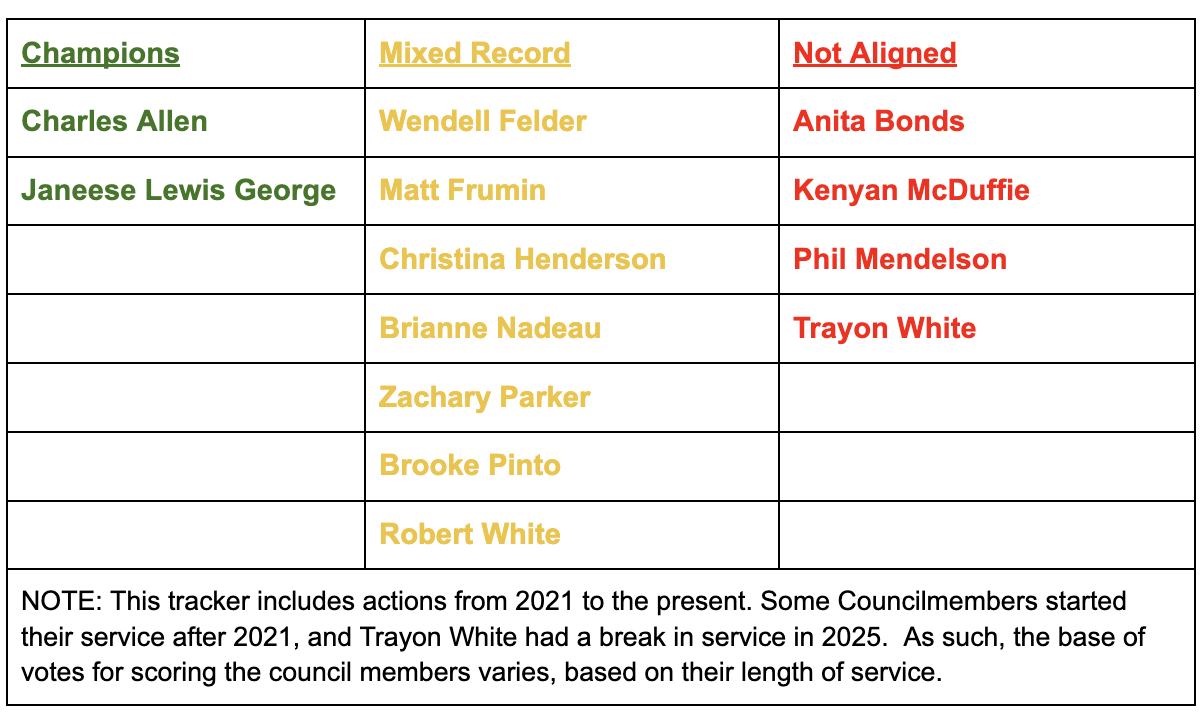
OVERALL RANKING OF DC Councilmembers on Environmental Justice
Green = Champion Yellow = Mixed Record Red = Not Aligned with DC4D
SPECIFIC VOTES CONSIDERED
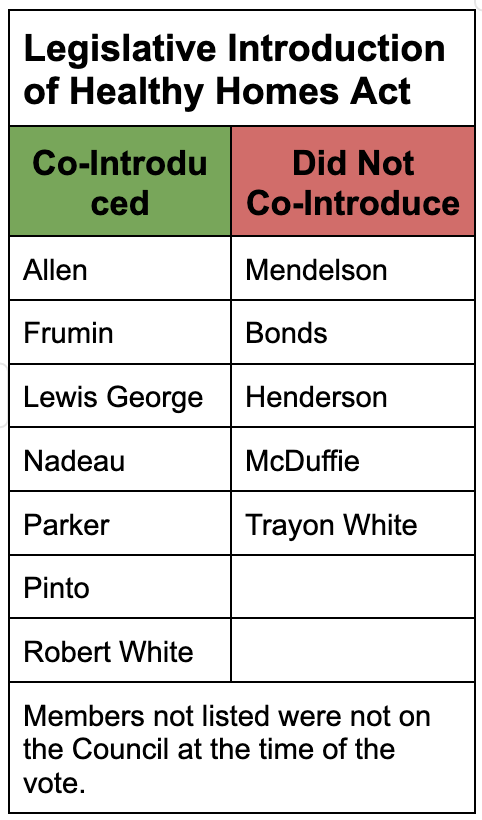
Did they sign on to the Healthy Homes and Residential Electrification Act? To meet DC’s carbon reduction targets, one important step will be for DC residents to shift from gas appliances to efficient electric appliances. This bill supports that transition by providing financial assistance to low- and moderate-income residents who couldn’t otherwise afford to switch. The DC Council Office on Racial Equity concluded that this legislation would improve the health of Black residents and other residents of color by enabling them to switch to healthier efficient electric appliances, reducing utility costs, and addressing climate change. The scoring below reflects those who introduced and signed on to the legislation and those who did not. Note that the legislation ultimately passed unanimously, so this scoring reflects early support, which is essential for legislation to succeed. DC for Democracy supported the legislation.
DC for Democracy supports this legislation.
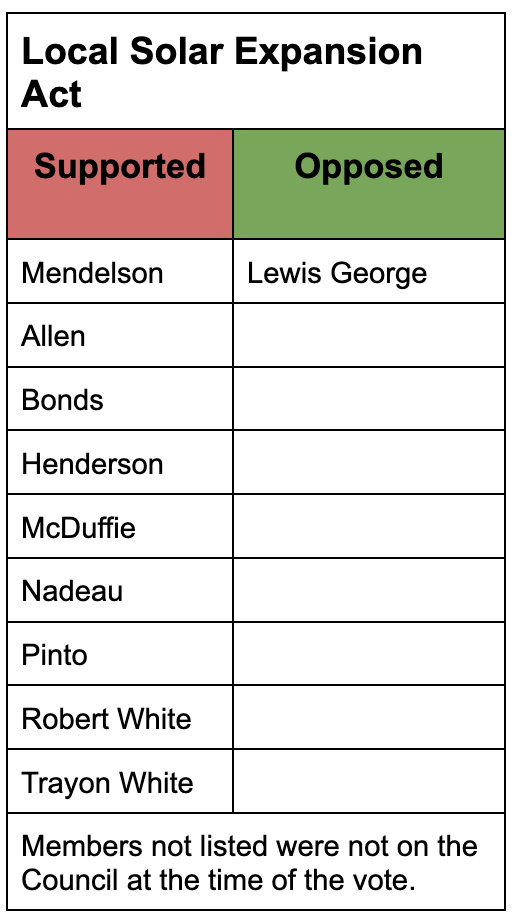
Did they oppose the Local Solar Expansion Act? While the title of this legislation sounds like a positive environmental contribution, the substance of the bill is not. It increased DC's solar energy credits, which were already among the highest in the nation. This change had the effect of providing generous subsidies to residents who had already installed solar. Such subsidies over time may actually reimburse these residents more than the cost of the solar installation.The legislation was pushed by the solar industry and will increase their profits. The generous solar subsidies will come from raising electricity rates on all households. In the end, the legislation (which was adopted) benefits for-profit solar installers and many wealthy residents, while hurting low- and moderate-income residents who do not own a home or participate in the Solar for All program. DC for Democracy opposed the legislation. The DC Council Office on Racial Equity concluded that the legislation worsens racial inequities in DC by raising electricity rates for Black and brown residents.
The scoring reflects those who opposed the bill and those who voted for it.
DC for Democracy opposed this legislation.
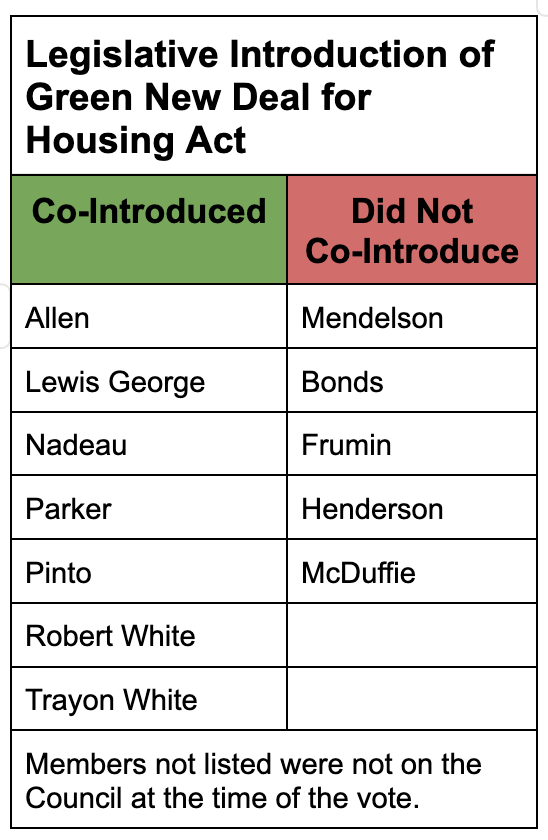
Did they sign on to the Green New Deal for Housing Act? The Green New Deal for Housing Act introduces a new form of housing to DC — known as “social housing.” The bill would create new DC-owned housing that reflects a mix of incomes, is permanently affordable to low and moderate income residents, includes important mechanisms for tenants to make decisions over the management of the property, and is built to the highest environmental standards. This scoring reflects those who helped introduce the legislation and those who have not signed on.
DC for Democracy supports this legislation.
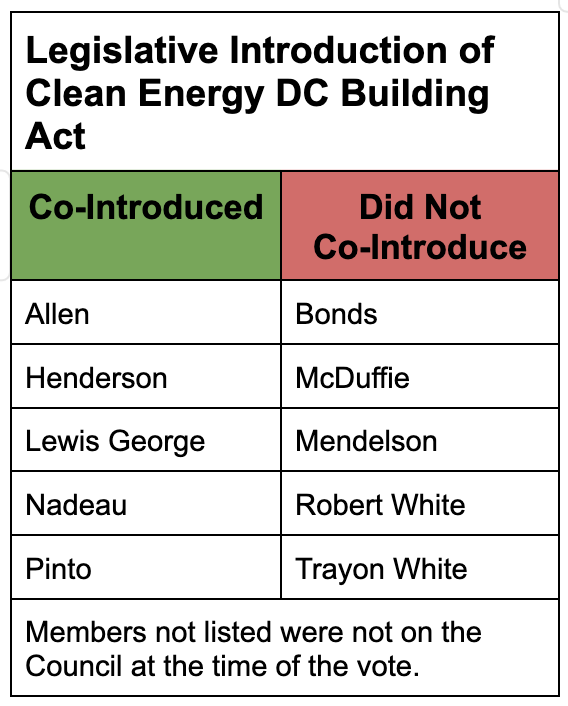
Did they sign on to the Clean Energy DC Building Code Act? This legislation contributed to DC’s climate commitments by requiring that all newly built commercial buildings have net zero carbon emissions. The scoring below reflects those who introduced and signed on to the legislation and those who did not. Note that the legislation ultimately passed unanimously, so this scoring reflects early support, which is essential for legislation to succeed. DC for Democracy supported the legislation.
DC for Democracy supports this legislation.
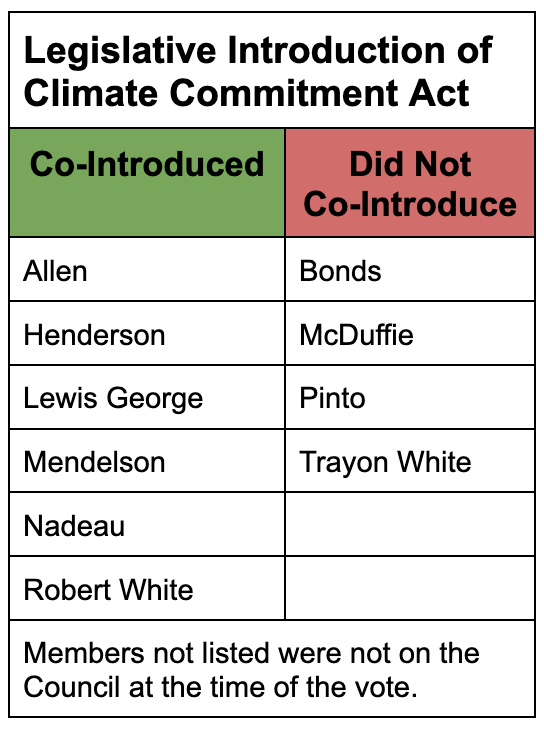
Did they sign on to the Climate Commitment Act? This legislation put into law DC’s commitment to achieve net zero carbon emissions by 2045 and set interim targets. It also set separate targets for DC government carbon emissions. The scoring below reflects those who introduced and signed on to the legislation and those who did not. Note that the legislation ultimately passed unanimously, so this scoring reflects early support, which is essential for legislation to succeed. DC for Democracy supported the legislation.
DC for Democracy supports this legislation.
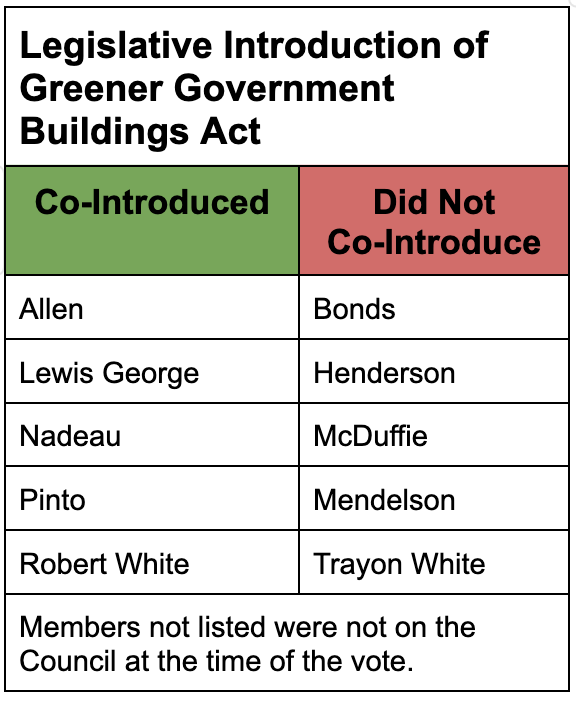
Did they sign on to the Greener Government Buildings Act? This legislation required that construction of new or substantially improved buildings that the District owns or finances adhere to net zero energy standards and not incorporate fossil fuel consumption. Net zero standards reduce energy consumption through efficiency and on-site renewable energy generation, dramatically cutting utility bills. The scoring below reflects those who introduced and signed on to the legislation and those who did not. Note that the legislation ultimately passed unanimously, so this scoring reflects early support, which is essential for legislation to succeed. DC for Democracy supported the legislation.
DC for Democracy supports this legislation.
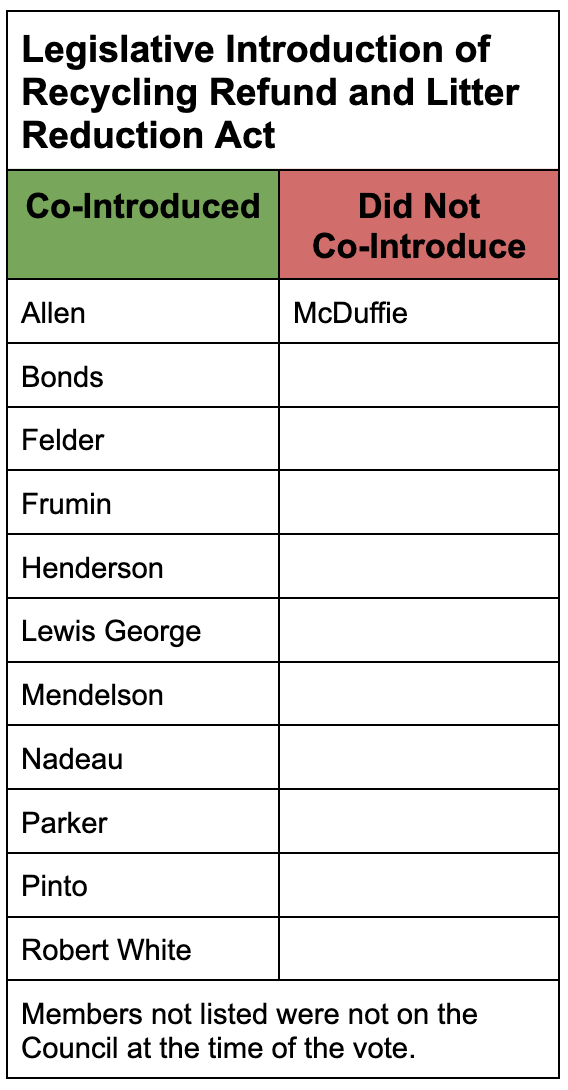
Did they sign on to the Recycling Refund and Litter Reduction Act (aka, the Bottle Bill)? This 2025 introduced legislation would reduce bottle waste by placing a 10-cent deposit on purchases of most beverages in glass, plastic, or metal bottles or cans. It also would create a modest opportunity for residents to earn income as they collect cans on the street. Large retailers would be required to have machines to collect returned bottles and provide refunds of the deposit amount. Similar legislation in numerous states has contributed to a substantial reduction in litter. The scoring below reflects those who introduced and signed on to the legislation and those who did not.
DC for Democracy supports this legislation.
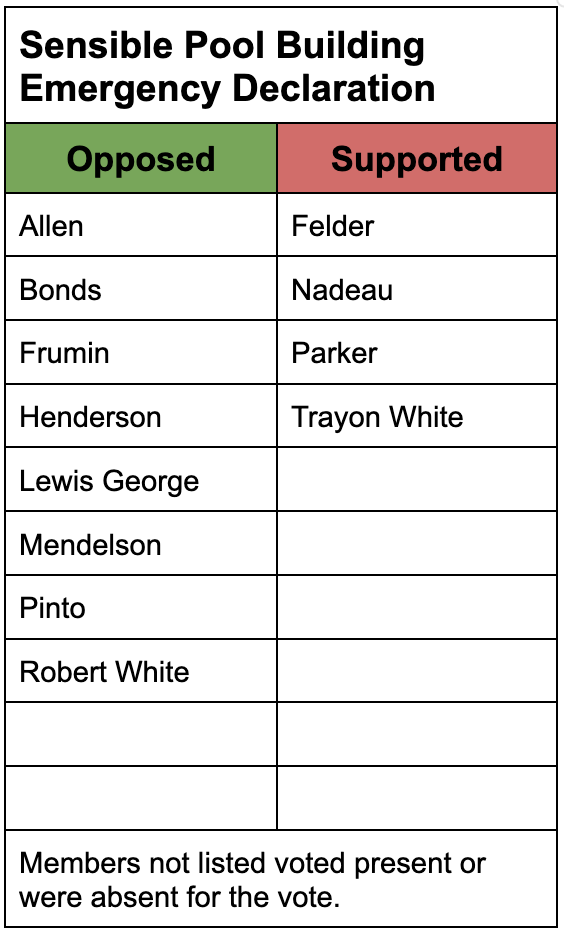
Did they oppose the Sensible Pool Building Emergency Declaration Act of 2025? This emergency declaration would have exempted a new pool complex in Ward 8 from the Green Building Act requirements, including net zero carbon emission requirements. Exempting individual projects from green building requirements would create a precedent for walking back DC’s commitment to reach net zero carbon emissions.
DC for Democracy opposed this declaration.
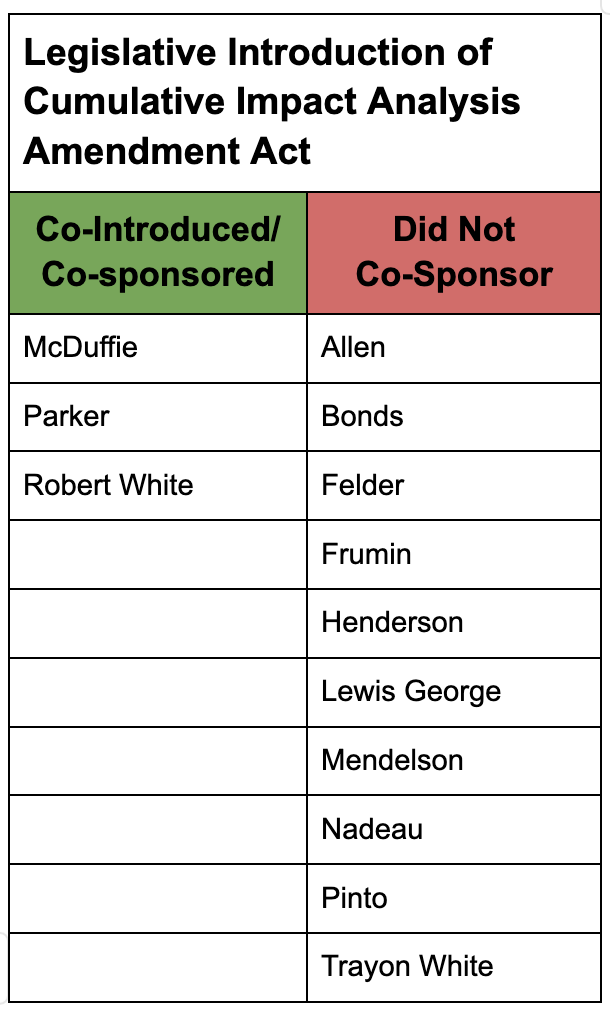
Did they introduce or co-sponsor the Cumulative Impact Analysis Amendment Act of 2025? For decades, the District has concentrated facilities that produce air pollution, hazardous waste, water pollution, stormwater runoff, and urban heat island effects in low income and predominantly Black neighborhoods in Wards 4, 5, 7, and 8. This legislation would establish a “cumulative impact statement” process that must be completed to obtain District permits and other relief for environmentally harmful actions in such overburdened communities. It would require an assessment of the cumulative impacts created by major actions and actions at applicable facilities in overburdened communities, require transparency and community engagement regarding those impacts, and result in the denial of the proposed action if a disproportionate impact on an overburdened community is identified. The scoring below reflects those council members who introduced or cosponsored the legislation and those who have not.
DC for Democracy supports this legislation.